



.jpg) Across the Falkland Islands there are many and varied birding opportunities. The Islands are home to some of the largest colonies of birds of both rare and enchanting species. Key species, besides the ubiquitous penguins, include albatrosses, shearwaters and petrels, geese, the inquisitive striated caracara and three endemic species – Cobb’s wren, Falklands Flightless Steamer duck and Tussac bird.
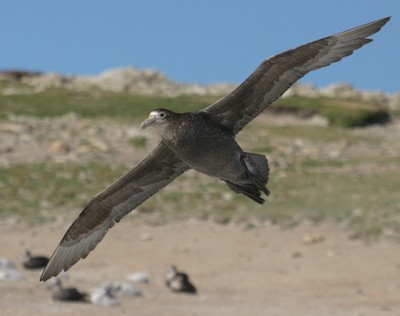
.jpg) Iconic black-browed albatrosses breed around the archipelago – over 70% of the world’s population can be found here - but are most numerous on the Jason Island group, which is a stopping point for some expedition vessels. Visiting in the summer months, these spectacular birds have an amazing wing-span of 210 – 250 cm (7 – 8 ft) and produce fluffy, grey young, frequently nesting in association with Rockhopper penguins. Magnificent in flight, clumsy when landing but elegant in appearance, the albatross is a stunning photographic study.
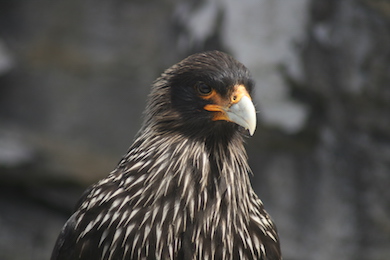 The striking southern caracara has colourful plumage but it’s the inquisitive nature of the striated caracara that will bring this bird to your attention!
Number of results:
Number of results: 28
, currently showing 21 to 28.
 Prev

Pebble Island
Pebble Island
Named for the attractive, unusual pebbles found on some of the beaches, Pebble Island is situated in the northwest of the archipelago. The terrain is varied with a chain of rocky peaks, a lakeland area and white sand beaches including the stunning…
Cape Bougainville
East Falkland
Located on Salvador Farm, also known as Gibraltar Station, on the north coast of East Falkland, Cape Bougainville is a picturesque site with cliffs and white sand beaches. It is home to a range of wildlife including Rockhopper and a few Macaroni…
Kidney Island
Kidney Island
Named for its shape, Kidney Island is located just a few miles from Stanley, the Islands’ capital. It is a National Nature Reserve and an Important Bird Area, a global standard set by Birdlife International.
Murrell Farm
East Falkland
The Murrrell Farm is located close to Stanley, the Islands’ capital, and is a short journey by road. It is a working farm with sheep and cattle. It is run in a traditional way with butter made from farm produce and peat cut by hand to heat to the…
Jason Islands
Jason Islands
The Jason Island group is named after a survey vessel, HMS Jason and located in the extreme northwest of the Falklands peninsula. This rocky-ridged chain of islands boasts breathtaking scenery and amazing wildlife.
Weddell Island
Weddell Island
Named after a British explorer, Weddell Island is located towards the southwest of the archipelago. It is the largest offshore island and has widely varying terrain from open plains to rocky hills, white sand beaches to sheltered coves.
Cape Dolphin
East Falkland
Located on the northern tip of East Falkland, the Cape Dolphin peninsula is reached by off-road track from the Cape Dolphin Farm buildings. Named after HMS Dolphin, the ship of British explorer John Byron, the area is a working farm with sheep bred…
Bertha's Beach
East Falkland
Situated on Fitzroy Farm, East Falkland, named after the shipwrecked barque “Bertha”, Bertha’s Beach is classified as an “Important Bird Area”, a global standard set by Birdlife International, and is a RAMSAR site.